How to spot fake software reviews & sponsored rankings
By Daniel Okafor · · 7 min read
Short answer: the giveaways of a fake or sponsored review are an order driven by affiliate payouts, a suspicious absence of any downside, recycled praise that fits every product, and ranking language that never explains why. Once you know the pattern, most "best software" lists read very differently.
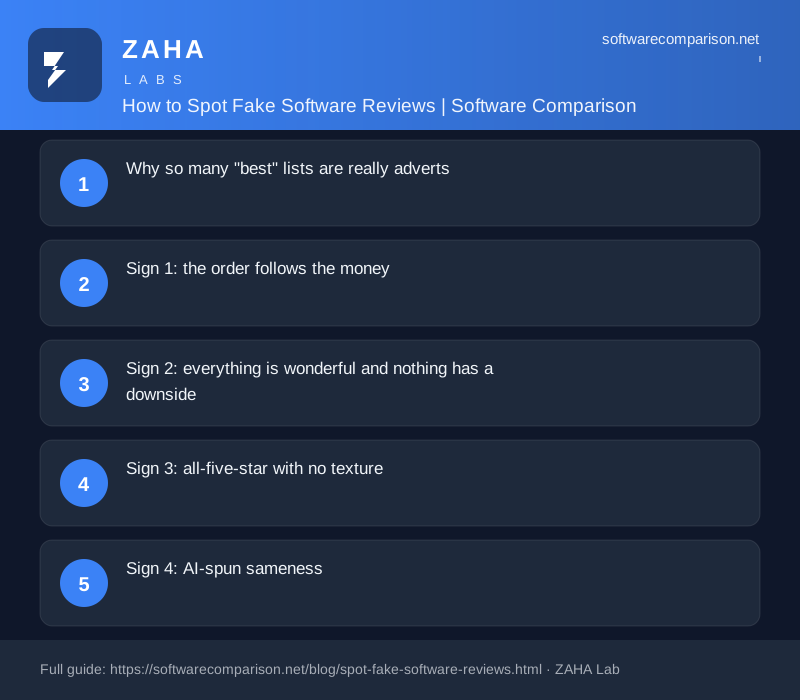
Why so many "best" lists are really adverts
A great deal of software "reviewing" online is not reviewing at all. It is affiliate marketing dressed as advice, where the ranking exists to earn a commission rather than to help you choose. That does not make every list dishonest — plenty of sites disclose their links and still give fair guidance — but it does mean you should read with your eyes open. The signs below are how you tell genuine evaluation from a polished sales page.
Sign 1: the order follows the money
The most common tell is a ranking where every entry happens to be an affiliate partner, and the order tracks how much each one pays rather than how good it is. Watch for lists that never explain their criteria, never name a clear winner for a clear reason, and conveniently leave out strong free or built-in options that pay nothing. Disclosing affiliate links is fine and honest; letting those links set the order is the problem. If you cannot work out why number one beat number two, the answer is often commission.
Sign 2: everything is wonderful and nothing has a downside
Real software has trade-offs. A credible review tells you who a tool is not for as readily as who it suits. So a wall of unbroken praise — every product excellent, every score near perfect, not a single meaningful drawback in sight — is a warning, not a recommendation. Be especially suspicious when the positives are generic ("powerful", "intuitive", "feature-rich") and could be copied from one product to the next without anyone noticing. Honest reviews are specific about weaknesses because weaknesses are where the useful information lives.
Sign 3: all-five-star with no texture
User-review sections deserve the same scepticism. A block of five-star ratings can be genuine, but look for texture: do the reviews describe real, specific experiences, or do they read like marketing copy? Clusters of glowing reviews appearing in a short window, near-identical phrasing, and praise that never mentions a single friction point all suggest the ratings were engineered. A healthy review profile has a spread, including thoughtful criticism the company has not scrubbed away.
Sign 4: AI-spun sameness
A newer tell is the flood of content that has clearly been generated at scale. You will recognise it by its sameness: the same hedging phrases, the same tidy structure, the same confident-but-empty summaries that never demonstrate the writer actually used the product. These pieces rarely contain a specific detail you could only know from hands-on experience — a quirk in the interface, a limit you hit, a setting that mattered. When a review could have been written without ever opening the software, it probably was.
Green flags vs red flags
| Topic | Green flag ✅ | Red flag 🚩 |
|---|---|---|
| Order | Stated criteria, clear reasons | Order tracks affiliate payout |
| Balance | Names real cons and trade-offs | All upside, no downside |
| Ratings | Spread with specific detail | All five-star, generic praise |
| Coverage | Includes free / built-in options | Only paid affiliate partners |
| Voice | Hands-on specifics | AI-spun, interchangeable |
How to read any review well
You do not need to distrust everything — you need a method. Prefer sources that state their criteria up front, disclose how they earn, mention genuine cons, and reference independent testing where it exists. Cross-check two or three sources rather than relying on one. Value specifics over adjectives, and respect reviewers willing to say that a popular product is simply not right for everyone. That last quality is rare precisely because it does not sell.
This is the principle behind everything we publish, and why our how to choose software framework gives you criteria rather than a ranking. For the related question of when a paid "top pick" is worth it at all, see free vs paid software, and for subscription tactics that often hide behind glowing reviews, how to avoid SaaS subscription traps.
Some links may be affiliate links; they never affect our recommendations.
Frequently asked questions
How can I tell if a software review is sponsored?
Look for the order being driven by affiliate payouts rather than merit, an absence of genuine drawbacks, identical praise recycled across products, and ranking language that never explains why one tool beats another. Honest reviews disclose commissions clearly, name real weaknesses, and give criteria you can apply yourself. If every link is monetised and every product is excellent, treat the ranking as advertising.
Are all-five-star reviews fake?
Not always, but a wall of five-star ratings with no balance is a warning sign. Real software has trade-offs, so a credible review names who a tool is not for as well as who it suits. Be especially wary when the positives are generic, the reviews cluster in a short window, and the language reads like marketing copy rather than user experience.
What is an affiliate-stuffed top list?
It is a ranking where every entry links to a paid affiliate programme and the order tracks commission size rather than quality. The tell is that the list never explains its criteria, never names a clear winner for a clear reason, and conveniently omits strong free or built-in options that pay nothing. Disclosure of affiliate links is fine; letting them set the order is not.
How do I find trustworthy software reviews?
Prefer sources that state their criteria up front, disclose how they earn, mention real cons, and reference independent testing where it exists. Cross-check several sources, look for specifics rather than adjectives, and value reviewers who are willing to say a popular product is not the right fit for everyone.
This article is general information to help you decide, not professional advice.